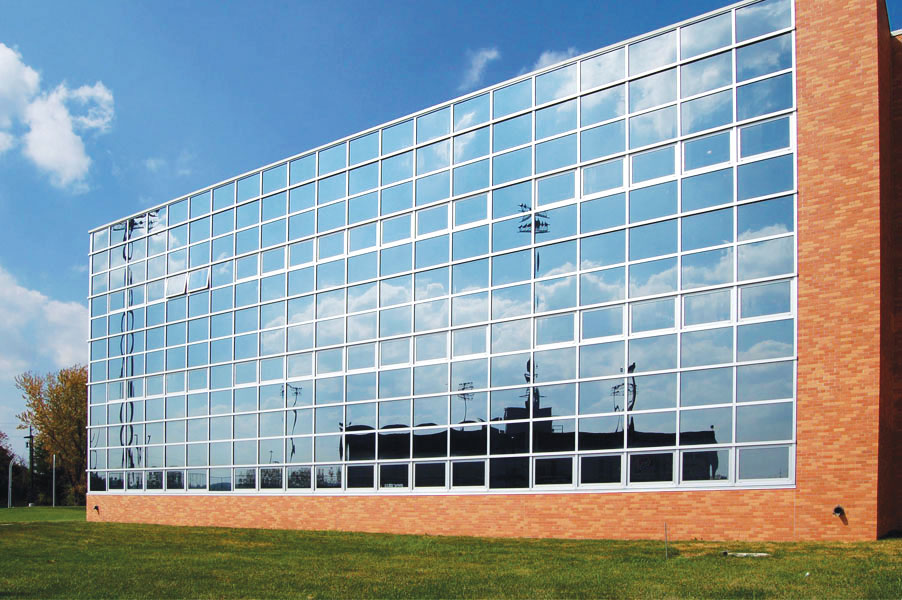
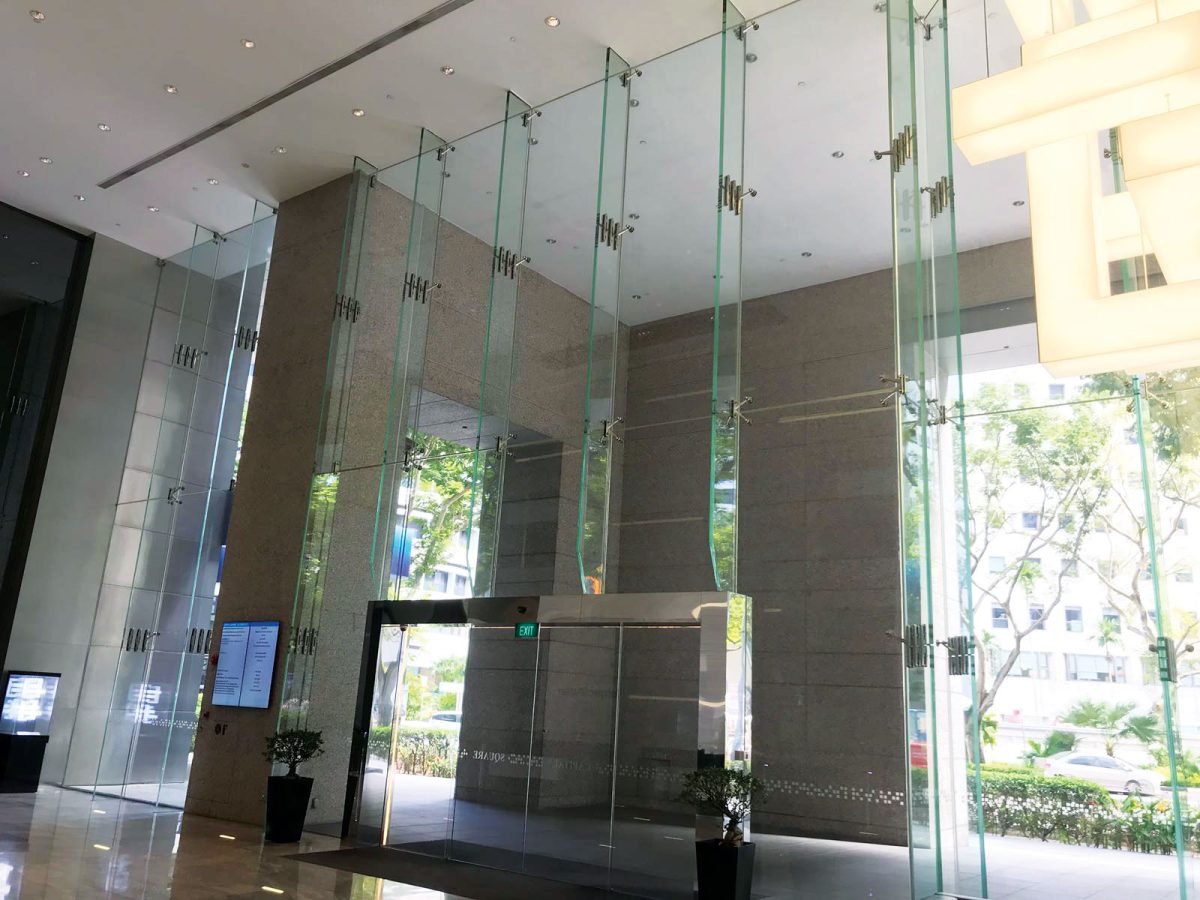
Unitized Curtain Walls is factoryassembled and glazed, then shipped to the job site in units that are typically one lite wide by one floor height. Only one unit-to-unit splice (usually a silicone sheet or patch) needs to be field-sealed, and only one anchor per mullion needs to be attached to the face or top of the floor slab. Interlocking unitized curtainwall frame members are weatheripped to seal to one another, both horizontally and vertically. This accommodates thermal expansion and contraction, inter-story differential movement, concrete creep, column foreshortening, and/or seismic movement. Most unitized curtainwall systems are installed in a sequential manner around each floor level, moving from the bottom to the top of the building.
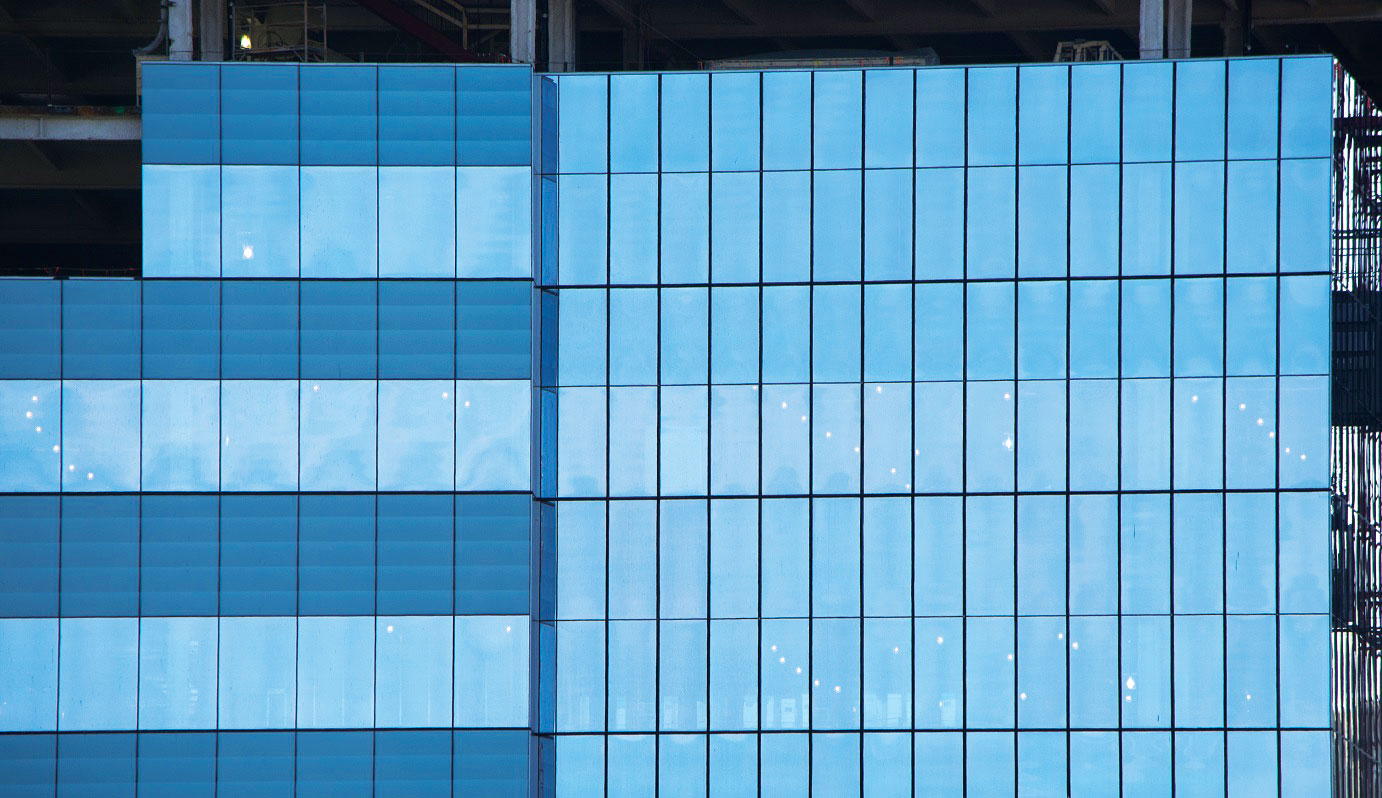
Semi-unitized Curtain Wall has the combined features of stick curtain wall and unitized curtain wall. Its basic structural principle is to fabricate other curtain wall components with the exception of main keels, to assemble them into unitized panel and then deliver to site to be fixed on main keel.
Stick Curtain Wall System is shipped in pieces for field-fabrication or assembly. These can be furnished as “stock lengths” to be cut, machined, assembled, and sealed in the field, or as “knocked down” (KD) parts pre-machined in the factory, for field assembly and sealing only. All stick curtainwalls are field-glazed. Frame assembly requires the use of either, a) “shear blocks” to connect vertical and horizontal framing elements, or b) “screw-spline” construction, in which assembly fasteners feed through holes in interlocking vertical stacking mullions into extruded races in horizontals.
Point-supported canopies and facades are comprised of stainless steel spider fittings and laminated tempered glass to resist wind load requirements. Glass attachment fittings are designed to flex when the glass is under loading to reduce stresses in the glass at the fitting connections. Spider fittings are typically bolted to a steel back-up structure or structural glass fins.